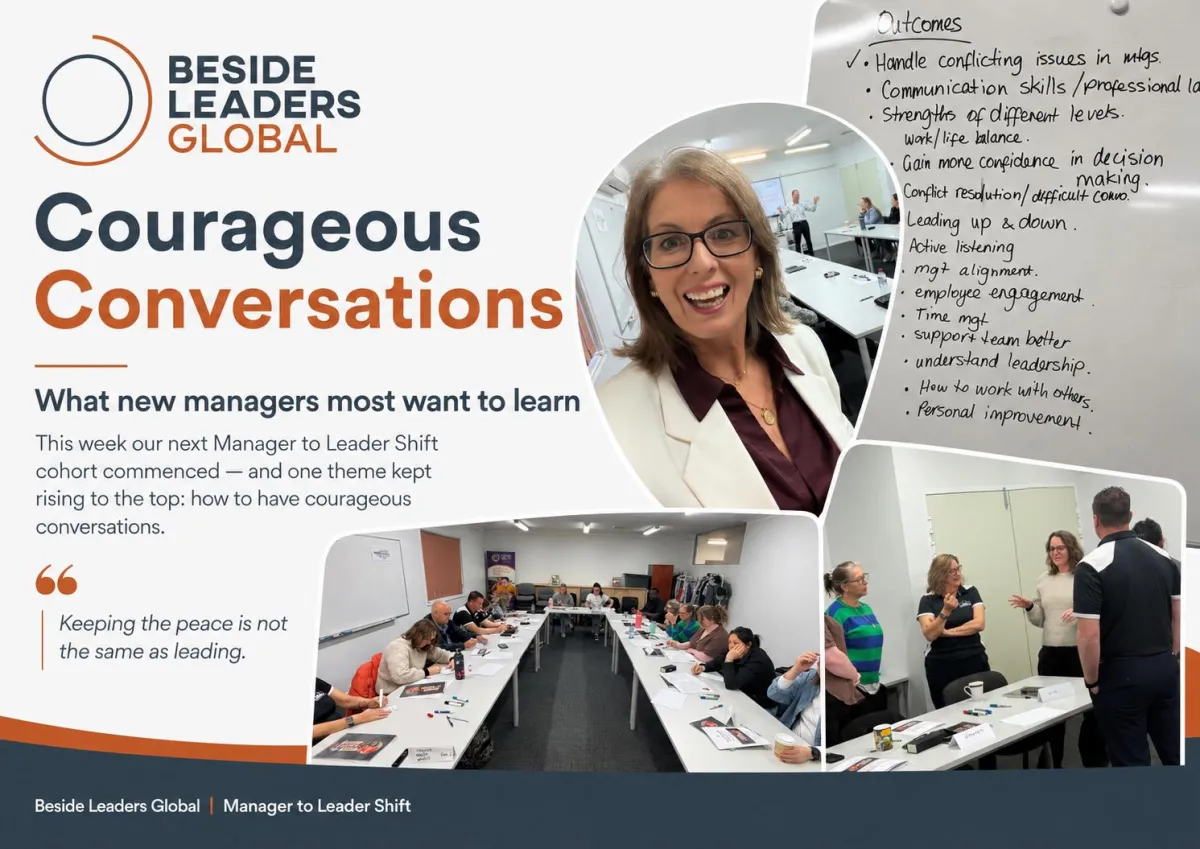
Keeping the peace is not the same as leading
Keeping the peace
is not the same as leading
This week, we welcomed the next cohort into ourManager to Leader Shift Program.
At the beginning of the program, we asked participants what they most wanted to strengthen as leaders. Their responses covered many of the real challenges managers face every day: resolving conflict, communicating professionally, making confident decisions, leading both up and down, listening actively, improving management alignment, engaging employees, supporting their teams and managing their own time and wellbeing.
But one theme kept rising above the others:How do I have courageous conversations?
Many capable leaders have learned to keep the peace. They smooth things over, compensate for other people, absorb additional work and avoid raising issues that might create discomfort.
It can look like patience, kindness or flexibility.
And for a while, it works. Until keeping the peace becomes the very pattern preventing the leader, the team and the organisation from growing.
There is often someone on the team whose behaviour, performance or attitude has been concerning for some time. The leader has noticed it. Other people have noticed it. The conversation has been rehearsed internally dozens of times, but it still has not happened.
The leader begins thinking:
What if I make things worse?
What if they become defensive?
What if they take it personally?
What if they leave?
So they stay quiet.
They carry more of the workload. They make excuses. They work around the person rather than addressing the issue directly. They tell themselves it is not serious enough yet or that the timing is not right.
But silence does not remove the problem. It simply moves the weight of the problem inside the leader—and spreads the consequences across the team.
Every conversation we avoid becomes additional emotional and operational weight. Trust begins to erode. Strong performers become frustrated. Standards become unclear. Resentment builds, and people start learning that agreements and expectations are optional.
The absence of a courageous conversation is still a form of communication.
It tells the team what will be tolerated.
Courageous conversations are not about becoming aggressive, blunt or confrontational. They are about developing the capacity to speak with both care and clarity.
A courageous leader can say:
“I value what you bring to this team, and there is something we need to address.”
“This behaviour is affecting other people, and we need to find a better way forward.”
“We agreed on this expectation, and it has not been met. Let’s talk about what is getting in the way.”
“I want to understand your perspective, and I also need to be clear about what must change.”
That is not conflict for conflict’s sake. It is leadership.
The shift from manager to leader happens when we stop measuring success by how comfortable everyone feels in the moment and start considering what will create greater trust, accountability and health over time. Sometimes the kindest conversation is the one we are most afraid to have.
Where might keeping the peace be preventing you from leading with greater courage and clarity?
Learn more - https://stewardeldership.besideleadersglobal.com/steward-eledership-page
